


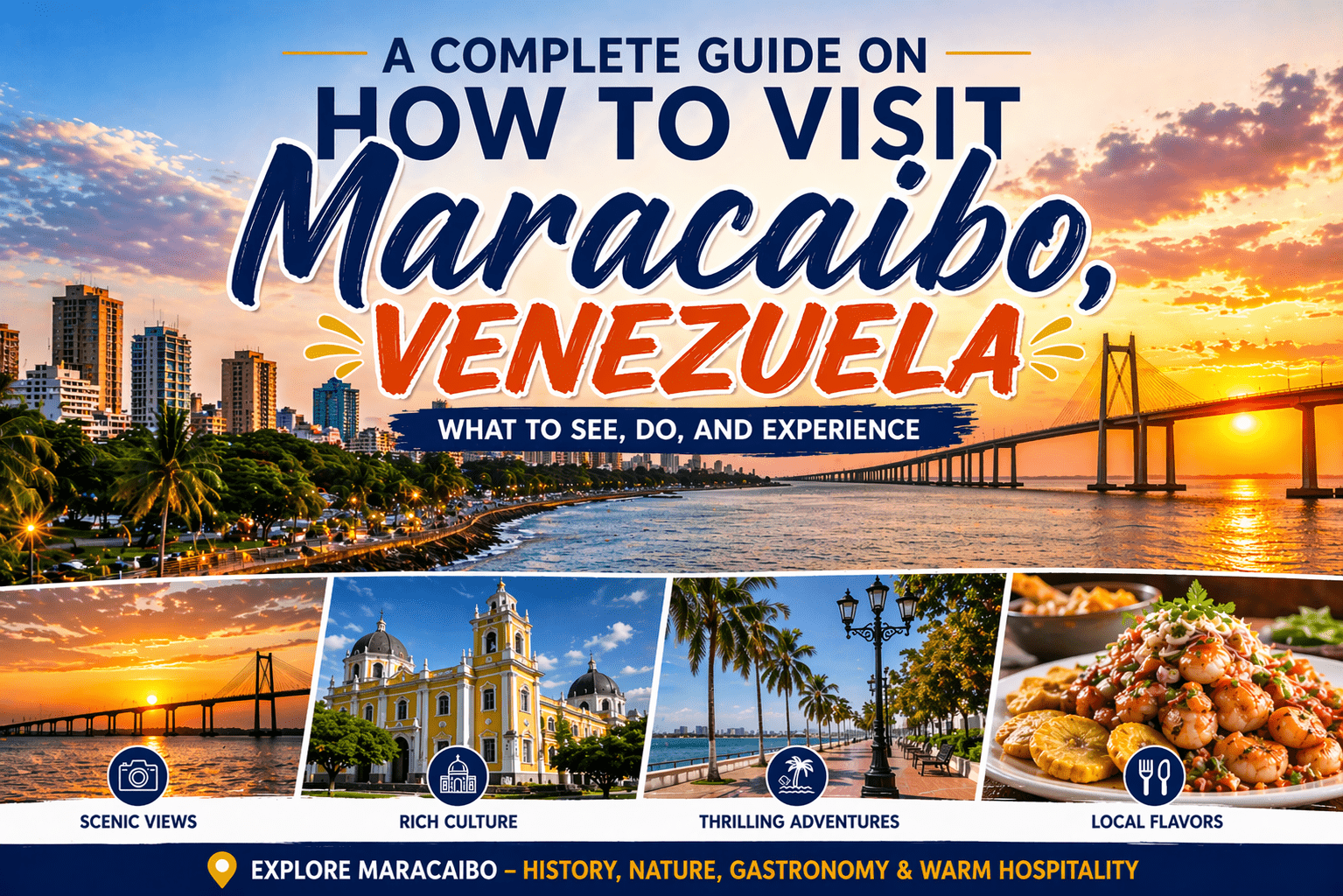
There is a city in northwestern Venezuela that most travelers overlook, and that is precisely what makes it so worth visiting. Maracaibo is loud, sun-drenched, and genuinely alive in a way that few South American cities can match. It is the kind of place where the architecture tells centuries-old stories, the food is an adventure in itself, and the natural world puts on a light show so extraordinary that it has earned a place in the Guinness World Records.
Known affectionately as La Tierra del Sol Amada — The Beloved Land of the Sun — Maracaibo is the capital of Venezuela’s Zulia state and the country’s second-largest city, home to more than 2.6 million people. It sits on the western shore of Lake Maracaibo, the largest lake in Latin America, a location that has shaped everything from the city’s economy and culture to the remarkable atmospheric phenomenon that lights up its skies almost every night.
This is not a destination for travelers seeking luxury resorts and manicured tourist trails. Maracaibo is raw, proud, and deeply authentic. It rewards those who come prepared and curious. Whether you are drawn by the colonial architecture of the old town, the spectacle of the Catatumbo lightning, or the irresistible pull of Zulian cuisine, this guide will walk you through everything you need to know to visit Maracaibo well.
Understanding Maracaibo: History, Culture, and Identity
A City Shaped by Oil and Independence
Maracaibo was founded in 1529, making it one of the oldest continuously inhabited European settlements in South America. For much of its early history, it was a modest port city connecting the interior of Venezuela to the Caribbean. That changed dramatically in the early twentieth century when vast oil reserves were discovered beneath Lake Maracaibo, transforming the city — and the entire country — almost overnight.
The wealth that flowed from the oil industry left a visible imprint on Maracaibo’s urban landscape, funding grand public buildings, wide boulevards, and a cultural confidence that locals still carry today. The city played a significant role in Venezuela’s independence movement, and the Battle of Lake Maracaibo in 1823 was the decisive naval engagement that sealed Venezuelan independence from Spain.
Gaita Zuliana: The Heartbeat of Maracaibo
No introduction to Maracaibo is complete without a mention of gaita zuliana, the city’s traditional musical genre. Rooted in African, indigenous, and European influences, gaita is characterized by its energetic rhythms, the cuatro (a small four-stringed guitar), the furro drum, and call-and-response vocals. During the Christmas season, gaita music fills every street and neighborhood, and the Maracaibo skyline becomes a celebration.
The music is not simply entertainment, it is identity. Gaita songs address everything from romance and humor to politics and faith, and hearing it live in the city is one of those travel experiences that stays with you long after you return home.
The Best Time to Visit Maracaibo
Maracaibo has a tropical climate and lives up to its nickname with year-round sunshine. However, the best time to visit is between December and April, when the dry season brings lower humidity, cooler evenings, and minimal rainfall. These months are ideal for exploring the city on foot and taking day trips to nearby attractions.
If you want to witness the famous Feria de la Chinita, the city’s most celebrated festival, plan your trip for mid-November. The festival honors the Virgin of Chiquinquirá with ten days of street parades, gaita concerts, traditional dances, rodeos, and fireworks — a joyful, colorful immersion into Maracaibo’s soul.
The rainy season runs from May to November, with peak rainfall in September and October. Traveling during this period is entirely possible and comes with the advantage of fewer visitors and lower accommodation prices. It also coincides with some of the most spectacular Catatumbo lightning activity, which intensifies during the wet season.
How to Get to Maracaibo
By Air
La Chinita International Airport (MAR) is Maracaibo’s main air gateway, located approximately 25 kilometers southwest of the city center. It receives domestic flights from Caracas and other Venezuelan cities, as well as some international connections through Bogotá and Panama City. From the airport, taxis to the city center take around 20 minutes, and it is strongly advisable to arrange a transfer through your hotel rather than hailing a cab independently.
By Bus
Maracaibo is connected to Venezuela’s main cities by long-distance buses. The journey from Caracas takes approximately nine hours and costs around $70. The Maracaibo Passenger Terminal serves as the central departure and arrival point. If you are coming from Colombia — a popular route for backpackers — Maracaibo is a natural first stop after crossing the border at Paraguachón.
By Road
The General Rafael Urdaneta Bridge, one of the city’s most iconic landmarks, connects Maracaibo to the rest of the country across Lake Maracaibo and is a major road artery for visitors arriving from the east and south of Venezuela.
Getting Around Maracaibo
Navigating Maracaibo requires a bit of planning. The Metro de Maracaibo exists but covers limited ground, with only six stations connecting the southwest to the city center. For most tourist purposes, your best options are taxis and established ride-hailing services. The golden rule here: always use taxis arranged through your hotel or a reputable taxi service. Never flag down a random taxi on the street, as the city’s safety landscape makes this a genuine risk. Most hotels and guesthouses are happy to call a trusted driver on your behalf.
During the day, some areas of the old colonial center are walkable, but Maracaibo’s tropical heat — frequently pushing past 35°C (95°F), makes extended walks uncomfortable. Plan outdoor exploration for early morning or late afternoon, and stay hydrated throughout the day.
Top Things to See and Do in Maracaibo
Basilica de Nuestra Señora de Chiquinquirá
No visit to Maracaibo is complete without stepping inside the Basilica de Nuestra Señora de Chiquinquirá, commonly known as La Chinita. This baroque cathedral is the spiritual heart of the city and home to Venezuela’s most venerated religious image — the Virgin of Chiquinquirá, patron saint of the Zulia state. According to local tradition, the image appeared miraculously on a board in the seventeenth century, and the devotion it inspired has never waned.
The basilica’s ornate interior, with its painted ceiling frescoes and the deep fervor of the daily masses, gives visitors a genuine sense of what this site means to Maracuchos. Even travelers who are not religious will find the atmosphere moving. The plaza surrounding the basilica is a natural gathering point for street vendors, musicians, and the ordinary rhythms of city life — the perfect place to sit and absorb the energy of Maracaibo.
The General Rafael Urdaneta Bridge
Spanning more than 8.6 kilometers across Lake Maracaibo, the General Rafael Urdaneta Bridge is a genuine feat of engineering and one of Venezuela’s most recognized landmarks. Construction began in 1957 and was completed in 1962, and the bridge remains one of the longest concrete bridges in the world. Named after a hero of Venezuelan independence, it serves as both a vital transport link and a source of local pride.
Driving across the bridge offers sweeping views of the lake below, with oil platforms dotting the horizon and the city skyline receding behind you. It is a quintessentially Maracaibo experience and a vivid reminder of how deeply the oil industry is woven into the city’s identity.
Calle Carabobo and the Colonial Old Town
The colonial center of Maracaibo, anchored by Calle Carabobo, is the city’s most photogenic neighborhood. Wide, shaded streets are lined with colorful traditional houses painted in yellows, pinks, and oranges, with ornate wooden shutters and wrought-iron balconies. The architecture is an enduring legacy of the Spanish colonial period, and despite the weathering of time, much of it retains extraordinary character.
Strolling along Calle Carabobo in the morning, when the light is soft and the heat is still manageable, is one of those rare travel moments when you feel you have genuinely discovered somewhere real. Beyond the color and architecture, the street leads to Plaza Baralt, a central square surrounded by important historical buildings and a great place to watch daily city life unfold.
Teatro Baralt
Teatro Baralt is one of the most elegant buildings in the city, a beautifully restored historic theater in the heart of the old town. Originally built in the nineteenth century, it is reputed to be the first place where a film was ever screened in South America — a claim that speaks to Maracaibo’s historical significance as a cosmopolitan port city.
Today, the theater hosts musical performances, plays, and art exhibitions, making it a cultural hub for the city. The interior is ornate and well-maintained, with art deco flourishes that reflect the prosperity of Maracaibo’s oil boom years. Even if there is no performance scheduled during your visit, the building itself is worth seeing.
Santa Rosa de Agua: The Palafitos District
Just north of the city center lies one of Maracaibo’s most visually striking neighborhoods: Santa Rosa de Agua, a community of traditional stilt houses (palafitos) built directly over the water. These structures reflect an indigenous building tradition that dates back centuries and is said to have inspired the name “Venezuela” — which means “Little Venice” — when Spanish explorers first encountered similar water settlements in 1499.
Santa Rosa de Agua offers a fascinating contrast to the urban energy of the city center. Wandering through the area by boat or along the narrow wooden walkways connecting the houses, you get a sense of a lifestyle that has persisted alongside, and largely separate from, Maracaibo’s modernization. The community has a church, small shops, and recreation areas, all of which can be visited.
The Catatumbo Lightning: A Natural Wonder of the World
Perhaps the most extraordinary reason to visit the Maracaibo region is the Catatumbo lightning, a meteorological phenomenon unlike anything else on Earth. Occurring over the mouth of the Catatumbo River where it flows into Lake Maracaibo, this near-permanent electrical storm produces an average of 250 lightning flashes per square kilometer per year, earning it the Guinness World Records title for the highest concentration of lightning on the planet, certified in 2014.
According to NASA Earthdata, the lightning occurs approximately 300 nights a year in the same location, a consistency so reliable that colonial sailors used it as a navigational beacon — earning it the nickname El Faro de Maracaibo, the Lighthouse of Maracaibo. The storm can rage for up to ten hours a night, producing as many as 280 lightning flashes per hour, all in near-complete silence because the strikes occur 50 to 100 kilometers from the shore.
To witness the Catatumbo lightning properly, most visitors join overnight boat tours from the town of Concha, traveling out onto the lake after dark. The experience — lying in a hammock on a floating lodge, watching the sky erupt in near-continuous light — is one of the most memorable things you can do anywhere in South America. The Venezuelan government has been working to have the phenomenon designated as a UNESCO World Heritage Site, recognizing its unique global significance.
Sinamaica Lagoon
A day trip from Maracaibo, Sinamaica Lagoon is a vast wetland area home to the Wayuu and other indigenous communities who still live in traditional palafito-style homes built over the water. Boat tours of the lagoon allow visitors to explore the community’s church, local shops, and the spectacular birdlife that inhabits the surrounding mangroves.
The journey from Maracaibo takes roughly 45 minutes by road, and boat tours from the main port typically last around 30 minutes on the water. The indigenous communities at Sinamaica have maintained their traditions and way of life for centuries, and visiting with a respectful awareness of their culture makes the experience genuinely enriching.
El Milagro Waterfront and Parque Vereda del Lago
Running along the western shore of Lake Maracaibo, Avenida El Milagro is Maracaibo’s main waterfront promenade. The adjacent Parque Vereda del Lago is a large lakeside park where families gather in the late afternoon, joggers circle the paths, and the heat of the day finally softens into something pleasant. The park offers beautiful views across the lake, and as evening approaches, the sky above the water often begins to pulse with the distant glow of Catatumbo lightning on the horizon.
Zulian Cuisine: What to Eat in Maracaibo
The food in Maracaibo is one of the great undiscovered pleasures of Venezuelan travel. Zulian cuisine has its own distinct character, shaped by the region’s tropical climate, its mix of indigenous, African, and Spanish culinary traditions, and its love of bold, satisfying flavors.
The dish most associated with Maracaibo is the Patacón Zuliano, a substantial sandwich where two thin, crispy slices of fried green or ripe plantain replace the bread, stuffed with shredded beef, chicken, ham, cheese, lettuce, and sauces. It is a street food staple and a deeply satisfying meal at any hour. Another essential is the Mandoca, a deep-fried ring made from cornmeal, ripe plantain, and unrefined cane sugar, typically served alongside a slice of salty white cheese — sweet, savory, and completely addictive for breakfast.
Beyond these local specialties, you will find all the classics of Venezuelan cuisine: arepas filled with various ingredients, hallacas (a rich tamale-like dish wrapped in banana leaves), and fresh tropical juices that make the heat of the city considerably more bearable. For a mid-range meal at a local restaurant, expect to pay around $10 to $15, making Maracaibo genuinely affordable for visitors.
Practical Travel Tips for Visiting Maracaibo
Safety Considerations
Maracaibo, like many Venezuelan cities, requires travelers to exercise consistent vigilance. Stick to well-known areas, particularly during the day, and avoid wandering unfamiliar neighborhoods after dark. Keep valuables out of sight, use hotel-arranged transportation, and always consult your country’s current travel advisory before planning your trip. Many travelers visit Maracaibo safely each year by following straightforward precautions and relying on local guidance.
Currency and Finances
Venezuela’s official currency is the Bolívar, but US dollars in cash are widely accepted and often preferred. Bring small bills — denominations of $1, $5, and $10 — as change can be difficult to come by. International credit and debit cards may not function reliably, so carrying sufficient cash for your stay is essential.
Health
Drink only bottled or purified water throughout your visit. The Farmatodo pharmacy chain operates locations across the city and is open 24 hours for basic medical needs. Ensure your travel vaccinations are up to date before departing, and consult your doctor regarding any health precautions specific to Venezuela.
Visas
Citizens of the Schengen Area do not require a visa for tourist stays of up to 90 days in Venezuela. A valid passport with at least six months of remaining validity is required, along with a return ticket and proof of accommodation. Travelers from other regions should verify current entry requirements with the Venezuelan embassy or consulate in their home country before traveling.
Conclusion: Maracaibo Is Unlike Anywhere Else
Maracaibo does not try to please everyone, and that is part of what makes it so compelling. It is a city that has weathered enormous challenges while holding fiercely to its identity — its music, its food, its religious traditions, and its extraordinary natural setting. The Catatumbo lightning alone would make the journey worthwhile, but Maracaibo offers much more than spectacle.
It offers authenticity. The kind of travel experience where you return home with stories rather than Instagram posts, where a meal at a local corner restaurant or a morning walk through a colonial street stays with you longer than any luxury itinerary. If you are planning a visit to Venezuela, do not let Maracaibo remain the city you almost visited. Make time for it. Come prepared, stay curious, and let the Beloved Land of the Sun show you what it is made of.
For more travel inspiration and luxury travel guides from around the world, explore LuxTravelBlogger.com.